- +91 7899892496
- info@theflorenceacademy.com

Middle Stage (Grades 6–8)
The Middle Stage represents an important phase in a student’s academic journey where learning becomes more subject-oriented and concept-driven. During this stage, students are gradually introduced to deeper subject knowledge while developing the ability to think critically, analyze information, and apply concepts to real-life situations.
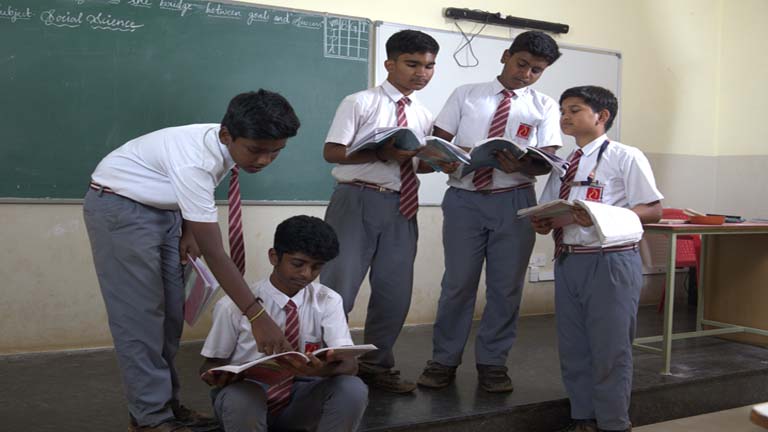
Classroom learning emphasizes experiential and inquiry-based methods, encouraging students to actively participate in the learning process. Through laboratory experiments, hands-on activities, case studies, and interdisciplinary projects, students gain a deeper understanding of concepts beyond textbooks. This approach nurtures curiosity, creativity, and a spirit of exploration.
In alignment with modern educational practices, students are introduced to basic coding, digital literacy, and emerging technologies, helping them develop essential skills required in today’s evolving world. Additionally, vocational awareness programs provide early exposure to different career pathways and practical skills, enabling students to appreciate the value of diverse professions.
The Middle Stage also focuses on strengthening analytical reasoning, logical thinking, collaboration, and problem-solving abilities. Through group discussions, presentations, and project-based learning, students build confidence, improve communication skills, and learn to work effectively as part of a team.
Overall, this stage prepares learners for the greater academic depth of the Secondary Stage, while equipping them with the knowledge, skills, and mindset needed for lifelong learning and responsible citizenship.

Florence Academy, Bengaluru, had a noble beginning in the year 2013. Today, its multi-story, beautiful infrastructure is facilitating education for more than 500 students. The school is located in the heart of Electronic City, Bengaluru... read more